Recent diplomatic achievements in Islamabad have sparked discussion about a potential revival in Pakistan’s foreign policy, but experts caution against overstating the country’s global influence. Rather than a sudden rise, these moves reflect strategic adjustments under pressure amid shifting regional dynamics.
Last month, Pakistan signed a defense pact with Saudi Arabia, stipulating that an attack on one nation would be treated as an attack on both. The agreement, unprecedented in its scale, strengthens security commitments in a region already fraught with rivalries. Concurrently, Islamabad has quietly begun exporting rare earth mineral samples to the United States, exploring deeper trade and resource partnerships that signal an effort to reposition its economic leverage.
“Pakistan is seizing opportunities created by regional volatility,” said Dr. Ayesha Khan, geopolitical analyst at the Institute for Strategic Studies in Islamabad. “But we must separate optics from real power. This is a pivot under necessity, not a full-fledged renaissance.”
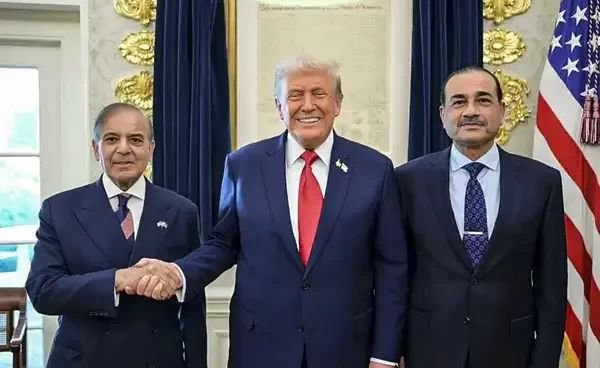
Prime Minister Shehbaz Sharif’s attendance at the Gaza peace summit reinforced the perception of Pakistan as a key player in Muslim world diplomacy. Analysts note that while the country is gaining diplomatic visibility, the foundations of its influence remain conditional, dependent on global powers’ strategic needs rather than intrinsic strength.
A key driver behind Islamabad’s maneuvers is the U.S. withdrawal from Afghanistan, which created a security vacuum in a region complicated by the Taliban and an assertive Iran. Washington, seeking a reliable counterbalance, has increasingly engaged Pakistan, recognizing its geographical advantage, intelligence networks, and political ties across Afghanistan. President Donald Trump’s request for Taliban control of Bagram Airbase — five years after the U.S.-Taliban agreement — illustrates the ongoing search for leverage, positioning Pakistan as a crucial fallback for U.S. strategy in South Asia.
While commentators in Islamabad and Riyadh describe these developments as a “foreign policy renaissance,” analysts emphasize that Pakistan’s gains are reactive, situational, and fragile. The country’s newfound momentum may offer short-term visibility and bargaining power, but its long-term influence will depend on navigating the pressures of regional volatility, economic challenges, and domestic political stability.
“This isn’t an overnight emergence as a global actor,” Dr. Khan concluded. “It’s a careful balancing act between opportunity and vulnerability.”