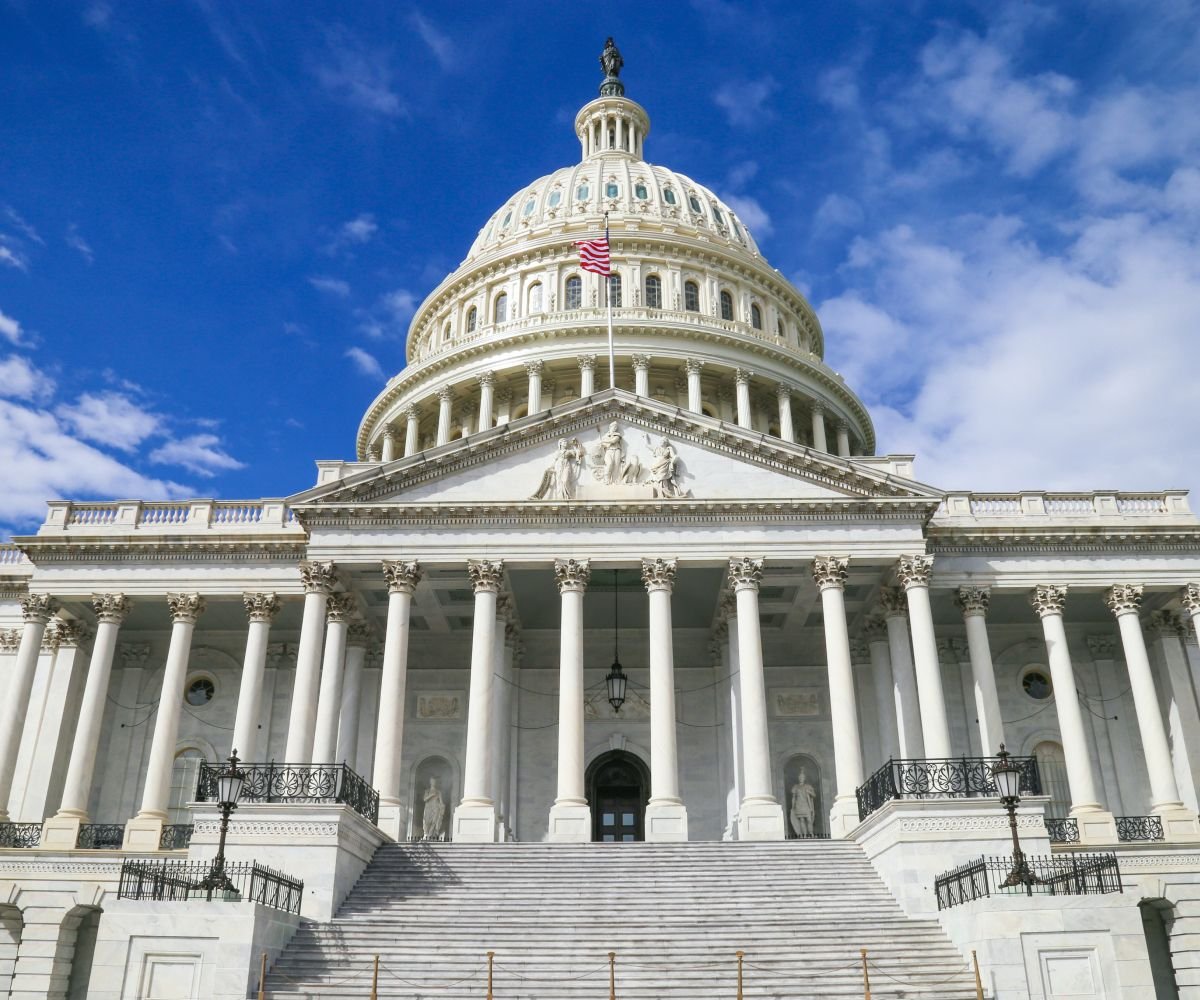
The United States has entered its fifth government shutdown in the past three decades, a crisis that began at midnight on October 1, 2025, after lawmakers in Congress failed to reach an agreement on a federal spending bill. The stalemate between House Republicans and the White House has brought large parts of the federal government to a halt, impacting millions of Americans and threatening economic stability.
According to data from the Office of Management and Budget (OMB), approximately 830,000 federal employees have been furloughed without pay, while another 1.3 million “essential” workers, including members of the military, border patrol agents, and air traffic controllers, are working without pay until Congress passes a new budget.
The Congressional Budget Office (CBO) estimates that every week of government shutdown costs the U.S. economy roughly $1.8 billion in lost productivity. The 2025 shutdown, already one of the longest in recent memory, is projected to surpass the 2019 record if it continues beyond mid-November.
Critical programs like WIC (Women, Infants, and Children) and SNAP (food assistance) are facing funding shortages. The Department of Housing and Urban Development (HUD) reported delays in housing vouchers, while national parks across the country remain closed, causing significant losses in tourism revenue. In a press briefing, Treasury Secretary Janet Yellen warned that prolonged inaction could “undermine confidence in the U.S. economy at a critical time,” emphasizing that even temporary shutdowns weaken credit markets and delay essential investments.
The shutdown was triggered after a spending bill failed to pass the Republican-controlled House of Representatives, where a faction of hardline conservatives demanded deeper cuts to social programs and restrictions on Ukraine aid. The Democratic-led Senate had approved a bipartisan measure to keep the government open for another six weeks, but negotiations collapsed hours before the deadline.
President Donald Trump, facing growing criticism, blamed “Democrat obstructionism,” while House Speaker Mike Johnson argued that Republicans were “fighting for fiscal responsibility.” Meanwhile, polls from Reuters/Ipsos show that 61% of Americans hold Congress responsible for the shutdown, compared to 27% blaming the White House.
From delayed paychecks for federal employees to halted scientific research and backlogs in immigration processing, the 2025 shutdown underscores the fragility of U.S. governance in a hyperpolarized political climate. If the impasse continues into November, the Moody’s Analytics report warns that the U.S. GDP could shrink by 0.3% in the fourth quarter, and consumer confidence could hit its lowest level since the pandemic.
For now, Washington remains at a standstill — and so does much of America.